Operator Playbook
How Much Does Live Music Cost for a Restaurant or Bar? (Real Numbers, 2026)
By GigFinesse Team ·
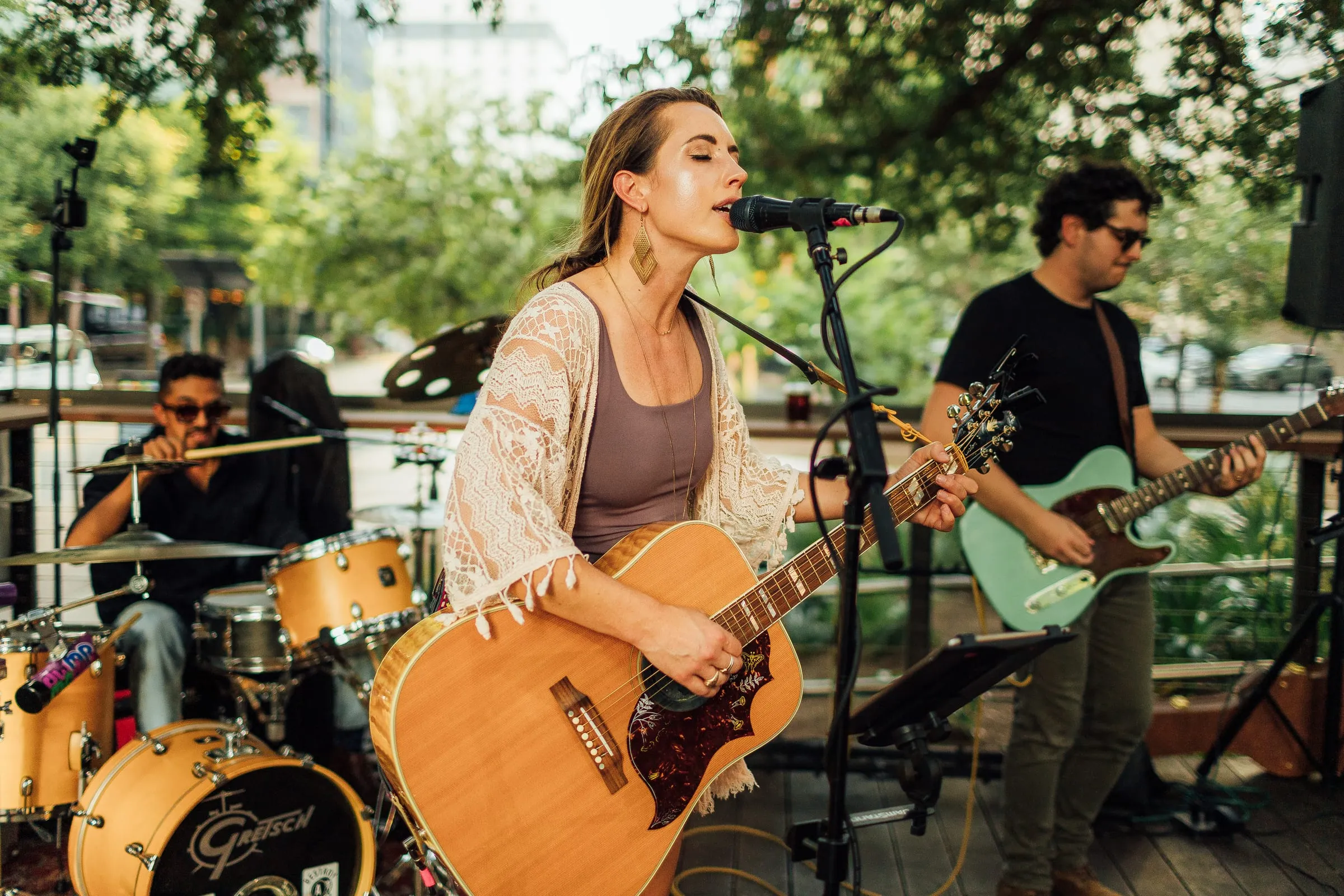
If you’ve Googled this question, you’ve probably found two kinds of answers: vague (“it depends!”) and suspicious (a wedding-band site quoting $4,000). Neither helps a GM trying to build next quarter’s budget.
So here are real numbers. We book over a thousand shows a month across the country, which means we see what venues actually pay, not what artists list on their websites. Rates below are typical market ranges for hospitality gigs (restaurants, bars, hotels, breweries), not weddings or corporate events, which run two to four times higher for the same talent.
What artists cost, by format
| Format | Typical per-show rate |
|---|---|
| Solo acoustic | $200–$400 (most $200–$300) |
| Duo | $300–$600 |
| Trio or full band | $500–$1,500+ |
| DJ | $200–$800 per set |
Solo acoustic act: the workhorse of restaurant music. A singer-guitarist or keys player doing two to three hours typically runs $200–$400 per show, with most bookings landing between $200 and $300. What determines the final price? Market, set length, equipment requirement, and genre can all play a part in determining the final price per show.
Duo: two players, fuller sound, still fits in a corner. Expect $300–$600 per show. Duos are often the best value-per-decibel in the building: they read as “a real show” to guests without requiring band-level space or volume management.
Trio or full band: $500–$1,500+ per show, range is determined by player count, genre and market standards. Cover Bands or groups with vocals make sense for venues where music is the destination (a dedicated music night, a large patio, a brewery), not as ambient dinner programming. If you are wanting a mood setting group with a robust feel, go for jazz or other instrument dominant configurations.
DJs: $200–$800 per set in hospitality settings, this artist type varies dramatically. Price is driven by genre, equipment requirements, and performance style.
Market matters, but less than you’d think. Austin, Nashville, LA, and New York have deeper talent pools, which keeps rates competitive despite higher costs of living. Smaller markets sometimes pay more for top local acts because supply is thin.
One thing we’ll say plainly: if a quote comes in dramatically under these ranges, ask why. An artist taking $75 for a Friday three-hour set is either brand new, double-booked, or about to cancel on you the moment a better gig calls. Sustainable rates are what make artists reliable, and reliability is the actual product you’re buying.
The costs nobody puts in the budget
The artist fee is the visible number. These are the ones that show up later:
Licensing. Blanket licenses from the performing rights organizations (ASCAP, BMI, and SESAC) typically total low-to-mid four figures annually for a single-location restaurant with regular live music. Non-negotiable, and far cheaper than the alternative. We covered this in depth in our GM licensing guide.
Sound. If artists bring their own PA, you pay more per set and lose control of your volume. A modest house system runs $1,500–$5,000 one-time and pays for itself in consistency. Budget a few hundred a year for cables, stands, and the microphone that will inevitably walk off. Looking for a full sound installation? Check out Pineapple Audio!
No-shows and mismatches. The invisible line item. A canceled show on a promoted night costs you the marketing spend, the staffing you scheduled against expected attendees, and a room full of guests who came for something that didn’t happen. DIY programs absorb throughout the year. Price it honestly: it’s hundreds of dollars per incident, plus trust.
Management time. Sourcing, vetting, confirming, troubleshooting, and paying artists takes a real person, real hours, typically five to ten hours a week for a multi-night program. At a manager’s loaded cost, that’s frequently the single largest expense in the whole program, and it’s the one nobody writes down.
Marketing and Admin. Promoting 2–3 shows a week requires a relentless production cycle that drains both budget and staff hours.
- Asset Creation: Designing custom posters, flyers, and digital assets for upwards of 12 shows a month is a massive time-sink. If you use a freelance graphic designer, expect to pay anywhere from $30 to $100 per asset, easily adding mid-three to low-four figures to your monthly overhead. If you push this onto an internal manager using DIY design tools, you are trading 5–8 hours a week of floor management time for asset creation.
- Calendar Maintenance: The work doesn’t stop once the flyer is made. Manually updating the venue’s website calendar and local listing sites with set times, artist bios, and media links takes an estimated 2–4 hours of meticulous administrative work every single week.
- The Agency Alternative: Handing this entire headache off to a freelance marketing consultant or a boutique agency solves the time problem but comes with a clear price tag. Retainers for this level of consistent local promotion and asset creation typically run $1,500 to $3,500+ per month, depending on your market.
The full monthly picture
Putting it together for a typical single-location restaurant running three nights a week of solo/duo programming:
| Line item | Estimated monthly cost |
|---|---|
| Artist fees | $2,500–$4,500 |
| Licensing (amortized) | $150–$350 |
| Sound | A rounding error after year one |
| Management (in-house time or booking fee) | ~$1,500–$3,000 |
| All in | $3,000–$6,000 |
Artist fees land around $2,500–$4,500 a month. Licensing adds roughly $150–$350 a month amortized. Sound is a rounding error after year one. The management line is either ~$1,500–$3,000 a month of someone’s time in-house, or a booking fee that replaces it. All in, most operators should expect a serious three-night program to cost $3,000–$6,000 a month depending on format and market.
Does it pay for itself?
The honest answer: it does when the math is run per programmed night, and operators who track it tend to keep expanding nights rather than cutting them. The levers are check lift (guests stay for another round when there’s a reason to stay), traffic on soft nights increases when there is a reason to be there, and repeat visits. Live music gives regulars a schedule to be regular about.
The programs that don’t pay for themselves share a profile: wrong act for the room, inconsistent scheduling guests can’t plan around, inexperienced bookers overpaying talent, or volume that fights the dining experience. The money fails downstream of the curation, almost never the other way around.
The cheapest option vs. the best-value option
You can absolutely run live music for less than the figures above. You can book whoever answers the Instagram DM, pay cash, skip the license, hope. Some venues do, for a while. The figures in this article describe what a durable program costs: licensed, consistent, matched to the room, still running in year two.
If you want the durable version without building the operation yourself, that’s the gap we exist to close. GigFinesse handles sourcing, scheduling, sound standards, payments, and replacements across 100s of venues nationwide. Because we book at volume, venues typically get stronger talent at better rates than they’d negotiate one DM at a time.
Want a real quote instead of ranges? Tell us about your space— venue type, market, and nights per week and we’ll send back the actual numbers the same day.